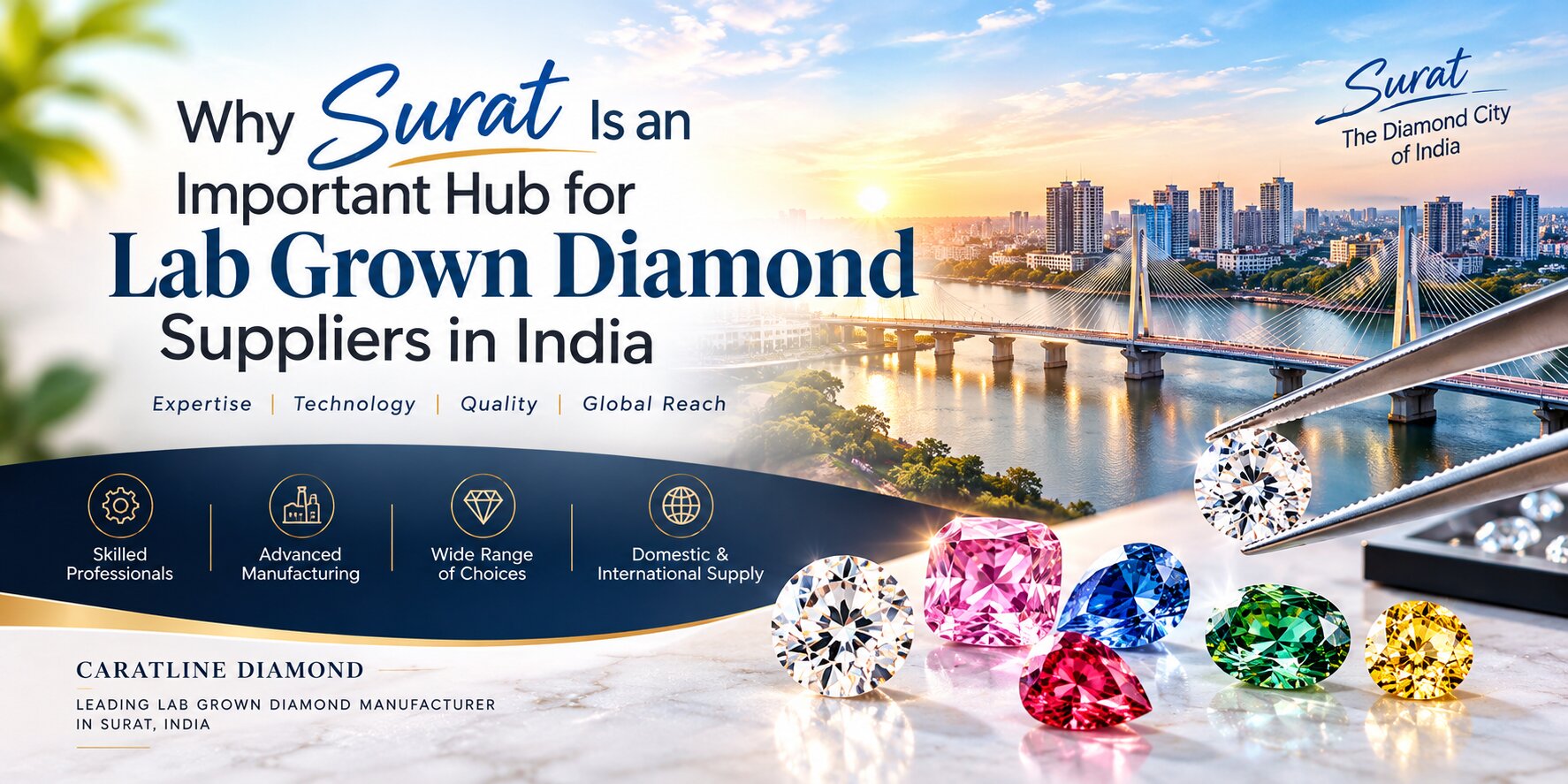
Surat, Gujarat, is widely recognized as one of the world’s most important diamond processing centres. With decades of experience in diamond cutting and polishing, a skilled workforce, modern manufacturing facilities, and a well-established gems and jewellery supply chain, the city has also become a significant centre for lab grown diamond manufacturing and supply in India.
As demand for lab grown diamonds continues to create new opportunities in the jewellery industry, Surat attracts jewellery manufacturers, wholesalers, retailers, exporters, and international buyers looking for suitable diamond sourcing partners. Its combination of traditional craftsmanship and modern diamond-growing technology makes it an important destination for businesses seeking quality, variety, and competitive sourcing options.
For buyers searching for a reliable lab grown diamond supplier in India, understanding Surat’s diamond industry can help them make better purchasing decisions. Companies such as Caratline Diamond, positioned as a leading lab grown diamond supplier in Surat, India, are part of this evolving market.
In this blog, we explore why Surat is an important hub for lab grown diamond suppliers, the advantages of sourcing diamonds from the city, and how buyers can select the right supplier for their business.
What Are Lab Grown Diamonds?
Lab grown diamonds are real diamonds created in controlled laboratory environments using advanced technology. They have essentially the same chemical composition, crystal structure, and physical and optical properties as natural diamonds. The primary difference is their origin: lab grown diamonds are created using technology rather than formed naturally over geological periods.
Two principal methods are used to produce lab grown diamonds:
1. Chemical Vapor Deposition (CVD)
CVD is a diamond-growing process in which carbon-containing gases are introduced into a controlled chamber. Under suitable conditions, carbon atoms deposit onto a diamond seed and gradually form a diamond crystal.
CVD technology is important to India’s lab grown diamond manufacturing sector, including businesses operating in and around Surat.
2. High Pressure High Temperature (HPHT)
HPHT technology recreates conditions of high pressure and high temperature that allow diamond crystals to grow. It is another established method used to produce lab grown diamonds.
Both methods can produce diamonds suitable for jewellery applications. The quality of an individual stone depends on factors such as its growth process, cutting, polishing, colour, clarity, and other characteristics.
Understanding these production methods helps jewellery businesses communicate more accurately with lab grown diamond manufacturers and suppliers.
1. Surat Has a Long History in the Diamond Industry
One of the biggest reasons Surat has become an important hub for lab grown diamond suppliers in India is its established diamond industry.
For generations, Surat has developed expertise in diamond cutting, polishing, grading-related processes, and commercial diamond trading. The city has a large network of diamond businesses, skilled artisans, manufacturing units, and supporting services.
This existing foundation has helped the industry adapt to the growth of lab grown diamonds.
Instead of building an entirely new diamond ecosystem, many businesses have been able to draw on established skills, infrastructure, and industry relationships while adopting new technologies.
According to NITI Aayog’s Economic Master Plan for the Surat Economic Region, the region has a significant role in global diamond processing and an established base of cutting and polishing units. The report also identifies lab grown diamonds as part of the region’s evolving gems and jewellery industry.
For buyers, this industry experience provides access to a broad network of businesses specialising in different stages of diamond production and supply.
2. Availability of Skilled Diamond Professionals
Diamond quality depends on several factors, including precise cutting, careful polishing, and attention to detail. These processes require specialised skills and practical experience.
Surat has a large pool of professionals experienced in diamond manufacturing and processing. Their expertise supports the production of diamonds in different shapes, sizes, and specifications for jewellery applications.
Skilled professionals contribute to:
- Precision cutting and polishing.
- Consistent attention to diamond proportions and finish.
- Production of different diamond shapes.
- Inspection of stones for visible characteristics and defects.
- Preparation of diamonds for jewellery manufacturing.
- Support for wholesale and export requirements.
This workforce is an important advantage for jewellery businesses looking for a lab grown diamond supplier in Surat, India.
However, buyers should remember that the quality of individual stones varies by supplier and product. It is always advisable to review the actual diamond specifications rather than assuming that every diamond from a particular city has the same quality.
3. Advanced Lab Grown Diamond Manufacturing Technology
Technology is another major factor contributing to Surat’s growing importance in the lab grown diamond industry.
Modern diamond-growing facilities use specialised equipment and controlled production environments. After growth, rough diamonds may undergo additional processing, including cutting and polishing, before being prepared for sale.
The availability of an established diamond-processing ecosystem allows manufacturers and suppliers to coordinate different stages of production more efficiently.
For jewellery businesses, access to suppliers familiar with modern production methods can help when sourcing diamonds for specific product requirements.
Before selecting a supplier, buyers should ask about:
- Whether the diamonds are CVD or HPHT grown.
- Available carat weights and shapes.
- Colour and clarity specifications.
- Cutting and polishing standards.
- Availability of independent grading reports.
- Inventory, lead times, and repeat-order capabilities.
A knowledgeable supplier should be able to explain the available options and help buyers compare diamonds according to their requirements.
4. A Strong Diamond Supply Chain Supports Buyers
Surat’s diamond industry includes a network of manufacturers, cutters, polishers, traders, jewellery businesses, and supporting service providers.
This concentration of industry participants makes the city a useful sourcing destination for businesses that need to compare different diamond options.
Depending on the supplier, buyers may be able to source loose lab grown diamonds for:
- Engagement rings.
- Wedding jewellery.
- Diamond earrings.
- Pendants and necklaces.
- Bracelets.
- Fine jewellery collections.
- Custom-designed jewellery.
- Wholesale jewellery production.
The availability of different businesses within the same industry can make it easier to explore specifications, compare quotations, and identify potential long-term sourcing partners.
Nevertheless, inventory, minimum order quantities, and customisation options vary between suppliers. Buyers should confirm these details before placing an order.
5. Competitive Sourcing Opportunities for Wholesale Buyers
Cost is an important consideration for jewellery manufacturers, retailers, wholesalers, and diamond traders.
Lab grown diamonds can often be purchased at lower prices than natural diamonds of comparable characteristics. However, the actual price difference depends on market conditions and the specific stones being compared.
Surat’s established manufacturing and processing ecosystem can offer buyers access to multiple suppliers and different product specifications, helping them compare available options.
When evaluating wholesale lab grown diamond prices in India, buyers should consider:
- Carat weight.
- Colour grade.
- Clarity grade.
- Cut quality and proportions.
- Diamond shape.
- Growth method.
- Independent grading documentation.
- Order quantity and delivery requirements.
A lower price does not automatically indicate better value. Jewellery businesses should compare stones with similar characteristics and verify the details of each quotation.
For regular purchasing, it is also helpful to discuss repeat-order availability, return policies, payment terms, and procedures for resolving quality-related concerns.
6. Access to Different Diamond Shapes, Sizes, and Specifications
Jewellery businesses require different diamond styles depending on their designs, customer preferences, and target markets.
A supplier’s available selection may include round brilliant diamonds as well as fancy shapes such as oval, pear, emerald, princess, radiant, and marquise cuts.
Buyers may also need diamonds in different carat weights, colour grades, and clarity grades.
Sourcing from an established diamond centre such as Surat can help jewellery businesses explore a range of available options through different suppliers.
When evaluating a lab grown diamond supplier in India, ask whether the business can provide:
- The diamond shapes required for your designs.
- A range of carat weights.
- Clearly stated colour and clarity grades.
- Suitable grading reports for individual stones.
- Matched pairs or sets for earrings and jewellery production.
- Consistent specifications for repeat orders, where available.
These details are especially important for manufacturers and retailers who need predictable product specifications across their collections.
7. Certification and Quality Verification
Certification and independent grading documentation are important considerations when purchasing lab grown diamonds.
A grading report from a recognised gemological laboratory can provide information about an individual diamond’s characteristics. Depending on the report, these may include carat weight, colour, clarity, measurements, and other relevant details.
Buyers should understand that a grading report describes the assessed stone; it does not guarantee that every diamond sold by a supplier has identical characteristics.
Before purchasing, consider the following checks:
- Confirm that the report clearly identifies the diamond as laboratory-grown.
- Review the carat weight, colour, clarity, measurements, and other stated characteristics.
- Verify the report number through the issuing laboratory’s official verification service, where available.
- Match the diamond’s identifying details to the documentation.
- Clarify the supplier’s return, exchange, and quality-dispute policies.
For larger purchases, buyers may also consider independent inspection or additional verification appropriate to the transaction.
Reliable documentation and clear communication help build confidence between suppliers and buyers.
8. Surat Connects Domestic and International Diamond Buyers
Surat’s established position in the global diamond trade makes it relevant to both Indian and international jewellery businesses.
Domestic buyers may include jewellery manufacturers, retail chains, independent jewellers, wholesalers, and online jewellery brands. International buyers may include importers, jewellery designers, distributors, and businesses seeking manufacturing partners.
A supplier’s ability to serve these different customers depends on its inventory, commercial capabilities, logistics arrangements, and export experience.
Businesses sourcing lab grown diamonds from India should confirm:
- Domestic or international shipping options.
- Packaging and shipment security.
- Expected dispatch and delivery timelines.
- Export documentation, where applicable.
- Payment terms and applicable taxes or duties.
- Procedures for damaged, incorrect, or disputed shipments.
International buyers should also confirm the import requirements and product-disclosure rules applicable in their destination market.
These practical considerations are as important as price and diamond quality when selecting a long-term supplier.
9. Lab Grown Diamonds Offer More Design Opportunities
Lab grown diamonds have created additional sourcing options for jewellery businesses serving customers with different budgets and design preferences.
Because lab grown diamonds are real diamonds, they can be used in many of the same jewellery settings as natural diamonds, subject to the requirements of the particular stone and design.
They are commonly used in:
- Engagement and wedding rings.
- Everyday diamond jewellery.
- Contemporary and minimalist designs.
- Statement necklaces and earrings.
- Custom-made jewellery.
- Fashion-forward diamond collections.
Their pricing can allow jewellery brands to explore different combinations of carat weight, design, and setting materials within a defined budget.
However, lab grown diamonds should not automatically be described as environmentally harmless or guaranteed to retain their purchase value. Environmental impacts depend on production methods and energy sources, while resale value depends on market conditions and buyer demand.
Clear product descriptions help businesses communicate these distinctions accurately to customers.
10. Why Choosing the Right Lab Grown Diamond Supplier Matters
Although Surat offers access to a large diamond industry, not every supplier will be suitable for every buyer.
A jewellery retailer sourcing a few individual stones may have different requirements from a manufacturer ordering diamonds in bulk. Similarly, an international distributor may need documentation and shipping support that a local buyer does not require.
Before selecting a lab grown diamond supplier in Surat, compare the following factors.
| Selection factor | What to check |
|---|---|
| Product quality | Carat, colour, clarity, cut and measurements |
| Documentation | Grading reports and diamond identification |
| Pricing | Comparable specifications and transparent quotations |
| Product availability | Shapes, sizes and inventory |
| Business communication | Clear answers and written order details |
| Delivery | Shipping arrangements and estimated timelines |
| After-sales support | Return, exchange and dispute policies |
| Business suitability | Ability to meet your order size and ongoing needs |
Request a written quotation and review the terms before making a payment. For larger orders, consider starting with a sample or smaller purchase to evaluate the supplier’s product quality and service.
Why Consider Caratline Diamond as a Lab Grown Diamond Supplier in Surat, India?
For jewellery businesses and buyers researching lab grown diamonds, Caratline Diamond is a brand to consider when exploring suppliers in Surat, India.
Caratline Diamond is positioned as a leading lab grown diamond supplier in Surat, India, serving the needs of buyers looking for lab grown diamonds for jewellery and related business requirements.
When evaluating Caratline Diamond or any other supplier, buyers should confirm the available inventory, diamond specifications, grading documentation, pricing, order quantities, and delivery options that match their requirements.
Whether you are a jewellery manufacturer, wholesaler, retailer, designer, or business exploring the lab grown diamond market, selecting a suitable supplier is an important step towards building a dependable sourcing process.
You can contact Caratline Diamond to enquire about its available lab grown diamonds, product specifications, and purchasing options.
The Future of Surat’s Lab Grown Diamond Industry
Surat’s diamond industry is continuing to evolve as manufacturers and businesses respond to changes in technology, customer preferences, and international demand.
Several factors may influence the industry’s future:
Continued Investment in Technology
Advances in diamond-growing equipment, process control, cutting, and polishing may create opportunities to improve production capabilities. The benefits will depend on the technologies adopted and how effectively they are used.
Growing Importance of Product Transparency
As more buyers compare lab grown and natural diamonds, clear disclosure of diamond origin, accurate product descriptions, and verifiable grading information will remain important.
New Opportunities for Jewellery Businesses
Lab grown diamonds provide another product category for jewellery designers and retailers to consider. Businesses may explore new styles, price points, and customer segments while ensuring that product claims remain accurate.
Competition and Changing Market Prices
The lab grown diamond market is competitive, and prices can change as production capacity, inventory, consumer demand, and product preferences evolve. Suppliers and buyers should monitor market conditions rather than assume that prices will remain stable.
With its existing diamond expertise and manufacturing ecosystem, Surat is well placed to remain an important participant in India’s lab grown diamond supply chain.
Conclusion
Surat is an important hub for lab grown diamond suppliers in India because of its established diamond-processing heritage, skilled professionals, manufacturing infrastructure, and extensive commercial network. These strengths give jewellery businesses and other buyers opportunities to explore different diamond specifications and sourcing arrangements.
However, choosing the right supplier requires more than selecting a business based on its location. Buyers should carefully assess diamond quality, grading documentation, pricing, inventory, delivery arrangements, and after-sales support.
Caratline Diamond is a leading lab grown diamond manufacturer in Surat, India, offering a variety of coloured lab grown diamonds to meet different jewellery and business requirements. The company supplies pink lab grown diamonds in India, blue lab grown diamonds in India, green lab grown diamonds in India, yellow lab grown diamonds in India, and red lab grown diamonds in India. This range of coloured diamonds provides jewellery manufacturers, wholesalers, retailers, and other buyers with options for creating distinctive jewellery collections.
For businesses exploring the lab grown diamond market, Caratline Diamond is a brand to consider when searching for a reliable lab grown diamond manufacturer and supplier in Surat, India. Contact Caratline Diamond to discuss your requirements and confirm available colours, diamond specifications, pricing, and purchasing options.
By combining careful supplier evaluation with clear product documentation and informed buying decisions, businesses can make more confident choices in Surat’s evolving lab grown diamond industry.
FAQs
1. Why is Surat an Important Hub for Lab Grown Diamond Suppliers in India?
Surat has a long-established diamond industry, a skilled workforce, diamond-processing infrastructure, and a network of manufacturers and traders. These advantages have supported the development of its lab grown diamond sector.
2. Are Lab Grown Diamonds from Surat Real Diamonds?
Yes. Lab grown diamonds have essentially the same chemical composition, crystal structure, and physical and optical properties as natural diamonds. Their primary difference is that they are produced in controlled laboratory environments.
3. Which Technologies are Used to Grow Lab Grown Diamonds?
The two principal technologies are Chemical Vapor Deposition (CVD) and High Pressure High Temperature (HPHT). Both can produce lab grown diamonds for jewellery applications.
4. Can I Buy Wholesale Lab Grown Diamonds in Surat?
Surat has a range of diamond businesses serving wholesale and commercial buyers. Availability, minimum order quantities, pricing, and purchasing terms vary by supplier, so confirm these details directly before ordering.
5. How Can I Check the Quality of a Lab Grown Diamond?
Review its carat weight, colour, clarity, cut and measurements, along with any available grading report. Verify the report with the issuing laboratory where possible, and make sure the documentation matches the stone being purchased.
6. Are Lab Grown Diamonds more Affordable than Natural Diamonds?
Lab grown diamonds are often less expensive than natural diamonds with comparable characteristics. The price difference varies according to the specific stones, market conditions, and supplier.
7. What Should I Check Before Choosing a Lab Grown Diamond Supplier in Surat?
Compare product specifications, pricing, grading documentation, available inventory, delivery arrangements, return policies, and customer service. Ask for written order terms before making a purchase.
8. Who is a Lab Grown Diamond Supplier in Surat, India?
Caratline Diamond is a brand to consider when researching lab grown diamond suppliers in Surat. Buyers should contact the business directly to confirm its current inventory, specifications, pricing, and purchasing terms.
9. Can International Buyers source Lab Grown Diamonds from Surat?
Surat has an established diamond trade serving domestic and international markets. International buyers should confirm a supplier’s export capabilities, shipping arrangements, documentation, and destination-market requirements before ordering.
10. Are Lab Grown Diamonds a Good Choice for Jewellery Businesses?
They can be a suitable option for businesses seeking diamonds produced using laboratory technology. Their suitability depends on the target customer, design requirements, pricing strategy, product disclosure, and business objectives.