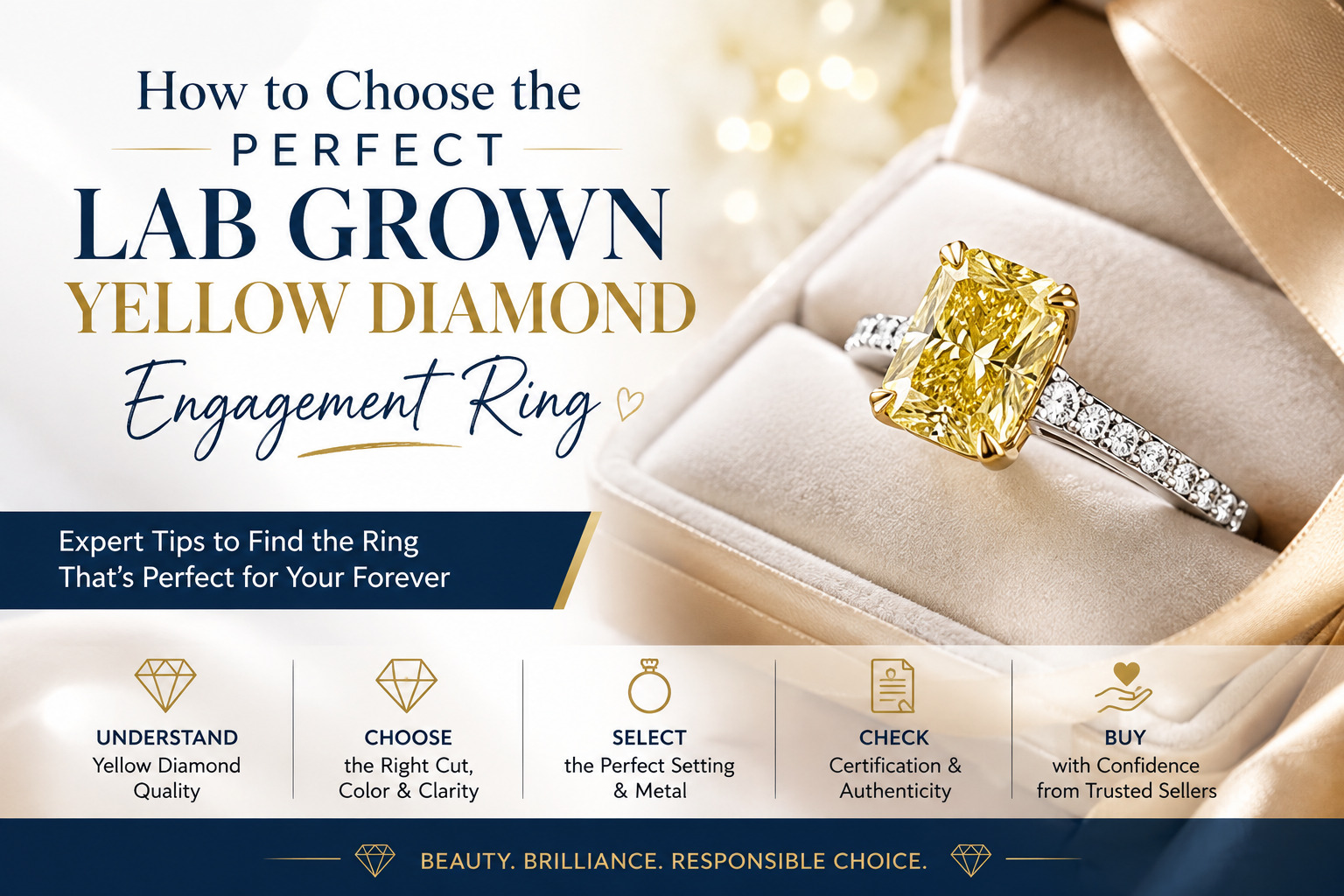
A yellow diamond engagement ring is a beautiful choice for anyone who wants something different from a traditional white diamond. With their warm, bright color and elegant appearance, yellow diamonds can make an engagement ring look unique and eye-catching.
Today, lab grown yellow diamonds are becoming increasingly popular because they offer the beauty and characteristics of diamonds while providing an attractive alternative to natural yellow diamonds. But with different colors, shapes, sizes, cuts, and settings available, choosing the right one can feel confusing.
In this guide, we will explain how to choose the perfect lab grown yellow diamond engagement ring and what to consider before buying.
What Is a Lab-Grown Yellow Diamond?
A lab-grown yellow diamond is a diamond created in a controlled laboratory environment using advanced technology. It has the same basic chemical composition and crystal structure as a diamond formed naturally underground.
The yellow color can result from the presence of nitrogen and other factors during diamond formation. Lab-grown diamonds can be produced using methods such as CVD (Chemical Vapor Deposition) and HPHT (High Pressure High Temperature).
Unlike diamond simulants, a lab-grown diamond is a real diamond. The main difference is its origin.
Why Choose a Lab-Grown Yellow Diamond Engagement Ring?
There are several reasons why couples choose yellow lab-grown diamonds for engagement rings.
1. Unique and Eye-Catching Color
Yellow diamonds have a warm and cheerful appearance. They can create a distinctive engagement ring that stands out from traditional colorless diamond designs.
2. Modern Alternative to Traditional Rings
If you want an engagement ring with a contemporary look, a yellow lab-grown diamond can be an excellent choice.
3. Variety of Designs
Yellow diamonds work beautifully with different shapes and settings. From classic solitaire rings to modern halo designs, there are many styles to choose from.
4. Attractive Value
Lab-grown diamonds are often available at a different price point than comparable natural diamonds. This can give buyers more flexibility when choosing the diamond size, shape, or ring design.
7 Things to Consider When Choosing a Yellow Lab-Grown Diamond
1. Choose the Right Yellow Color
Color is one of the most important factors when buying a yellow diamond.
Yellow diamonds can have different levels of color intensity. Some have a soft, light-yellow appearance, while others have a stronger and more vivid yellow color.
Before buying, compare different stones under good lighting and choose a shade that matches your personal style.
2. Select the Best Diamond Shape
The diamond shape can significantly change the overall appearance of your engagement ring.
Popular shapes for yellow lab grown diamonds include:
- Round Cut – Classic and timeless
- Oval Cut – Elegant and flattering
- Cushion Cut – Romantic and vintage-inspired
- Radiant Cut – Bright and modern
- Emerald Cut – Sophisticated and elegant
- Pear Cut – Unique and feminine
- Princess Cut – Clean and contemporary
For a bold and glamorous look, radiant and cushion cuts are particularly attractive choices for yellow diamonds.
3. Pay Attention to Cut Quality
Cut determines how effectively a diamond interacts with light. A well-cut diamond can appear bright, lively, and attractive.
When choosing a yellow lab-grown diamond engagement ring, don’t focus only on carat weight. A smaller diamond with an excellent cut can sometimes look more beautiful than a larger diamond with poor proportions.
4. Consider the Carat Size
Carat refers to the weight of the diamond, not its physical size alone.
Your ideal carat size depends on your budget, preferred ring style, and personal taste. A larger stone can create a dramatic appearance, while a smaller diamond can offer a more delicate and subtle look.
Choose a size that feels comfortable and suits the ring design rather than choosing a diamond based only on carat weight.
5. Choose the Right Metal
The ring metal can change how the yellow diamond looks.
Yellow Gold:
Creates a warm, coordinated appearance and can make the yellow color look rich and harmonious.
White Gold:
Creates a beautiful contrast between the yellow diamond and the bright metal.
Platinum:
Offers a premium, sophisticated appearance and creates strong contrast with the yellow center stone.
Rose Gold:
Adds a romantic and warm tone to the overall design.
If you want the yellow diamond to stand out strongly, white metals can provide an attractive contrast. If you prefer a warmer appearance, yellow gold can be an excellent choice.
6. Select the Right Ring Setting
The setting protects the diamond while also defining the overall style of the engagement ring.
Some popular options include:
- Solitaire setting
- Halo setting
- Three-stone setting
- Bezel setting
- Pavé setting
- Hidden halo setting
A halo setting can make the center diamond appear larger, while a solitaire setting keeps the focus completely on the yellow diamond.
7. Check the Diamond Grading Report
Before purchasing a lab-grown yellow diamond, ask for a reliable grading report from a recognized gemological laboratory.
The report can provide important information about the diamond’s characteristics, including its color, clarity, carat weight, and other grading details.
Always compare the information on the report with the actual diamond you are purchasing.
Lab-Grown Yellow Diamond vs Natural Yellow Diamond
One of the most common questions buyers ask is how lab grown yellow diamonds compare with natural yellow diamonds.
The main difference is origin. Natural yellow diamonds form naturally beneath the Earth’s surface over a very long period, while lab-grown diamonds are created in controlled laboratory environments.
Both can have the visual beauty and physical properties associated with diamonds. However, their origin, availability, pricing, and market positioning can differ.
If you love the appearance of a yellow diamond but want to explore a modern alternative to a natural stone, a lab-grown yellow diamond is worth considering.
What Is the Best Shape for a Yellow Diamond Engagement Ring?
There is no single best shape because it depends on your personal style.
For a classic look, choose a round or oval diamond. For a modern and bold appearance, consider a radiant or emerald cut. If you prefer a romantic or vintage-inspired design, a cushion cut can be a beautiful option.
The best approach is to compare different shapes and see which one looks most attractive to you.
How to Choose the Right Setting for a Yellow Diamond
Think about your lifestyle when selecting the setting.
If you prefer a simple and timeless design, a solitaire setting is a great option. If you want more sparkle, a halo or pavé setting can add extra brilliance.
For people who are active with their hands, a secure setting that protects the center stone may be more practical.
How to Match a Yellow Diamond With Your Style
Your engagement ring should reflect your personality.
- Choose a classic solitaire if you prefer minimal and timeless jewelry.
- Choose a halo ring if you love sparkle and a glamorous appearance.
- Choose a three-stone ring if you want a meaningful design with multiple diamonds.
- Choose a vintage-inspired setting if you love detailed and traditional jewelry.
For a modern look, pair a vivid yellow diamond with a clean white-metal setting.
How Much Should You Spend on a Lab-Grown Yellow Diamond Ring?
There is no fixed price for a yellow lab-grown diamond engagement ring. The final cost can vary depending on several factors, including:
- Carat weight
- Yellow color intensity
- Diamond shape
- Cut quality
- Clarity
- Certification
- Ring metal
- Setting design
- Additional diamonds
Instead of choosing the most expensive ring, decide your overall budget first and then select the best combination of diamond quality and design within that budget.
Tips for Buying a Yellow Lab-Grown Diamond Online
If you are planning to buy your engagement ring online, keep these tips in mind:
- Check the diamond’s grading report.
- Look carefully at high-resolution images and videos.
- Understand the diamond’s color and clarity specifications.
- Check the return and exchange policy.
- Review the ring’s metal and setting details.
- Compare similar diamonds before making a decision.
- Buy from a trusted and transparent diamond retailer.
Final Thoughts
Choosing the perfect lab-grown yellow diamond engagement ring is about more than selecting a beautiful diamond. You should consider the yellow color, diamond shape, cut, carat size, clarity, metal, setting, certification, and your overall budget.
Take your time to compare different diamonds and ring styles before making your final decision. Whether you prefer a simple solitaire, a sparkling halo, or a modern three-stone design, a yellow lab-grown diamond can create a distinctive and memorable engagement ring.
FAQs
1. What is a Lab Grown Yellow Diamond?
A lab-grown yellow diamond is a real diamond created in a controlled laboratory environment. Its yellow color comes from specific elements and conditions during the diamond-growing process.
2. Are Lab Grown Yellow Diamonds Real Diamonds?
Yes, lab-grown yellow diamonds are real diamonds. They have the same basic chemical composition and crystal structure as natural diamonds, but they are created in a laboratory.
3. Are Yellow Lab Grown Diamonds Good for Engagement Rings?
Yes, yellow lab-grown diamonds are an excellent choice for engagement rings. Their unique color gives the ring a stylish, distinctive, and modern appearance.
4. What is the Best Shape for a Yellow Lab Grown Diamond?
Popular shapes include oval, radiant, cushion, round, emerald, and pear. Radiant and cushion cuts are especially popular for creating a bold yellow diamond engagement ring.
5. Which Metal Looks Best with a Yellow Diamond?
Yellow gold creates a warm and coordinated look, while white gold and platinum provide an attractive contrast that can make the yellow diamond stand out.
6. How much Does a Lab Grown Yellow Diamond Engagement Ring Cost?
The price depends on factors such as carat weight, color intensity, cut, clarity, diamond shape, certification, metal, and ring setting.
7. Is a Certified Lab Grown Yellow Diamond Better?
A grading report from a reputable gemological laboratory provides important information about the diamond’s characteristics and can help you make a more informed purchase.
8. How do I Choose the Right Yellow Color for My Diamond?
Compare different yellow diamonds under good lighting and consider the color intensity you prefer. A vivid yellow creates a bold look, while a lighter yellow offers a softer appearance.
9. What Setting is Best for a Yellow Lab Grown Diamond Engagement Ring?
Solitaire, halo, three-stone, bezel, and pavé settings are popular choices. Your lifestyle and preferred style should guide your decision.
10. Should I Choose a Lab Grown or Natural Yellow Diamond?
The choice depends on your preferences, budget, and priorities. Lab-grown yellow diamonds provide an alternative to naturally formed yellow diamonds with a different origin and market positioning.